Story · Ages 6–9
The Fox and the Grapes
Have you ever decided you didn't want something — the exact moment you couldn't have it?
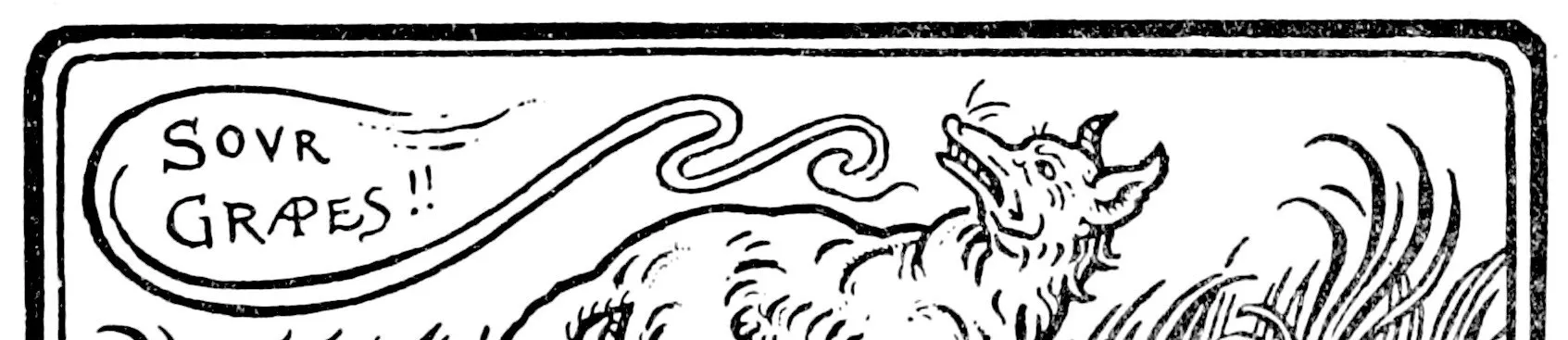
A fox was walking through the forest when he saw them: a bunch of grapes, fat and purple, hanging from a vine that had climbed up a tall branch.
His mouth watered. He backed up a few steps, ran, and jumped. He missed by a whisker.
He tried again, running faster, jumping higher. The grapes swung on their stem and stayed where they were. Again. Again. He was panting now, and the grapes were exactly as far away as when he started.
Finally the fox gave up. He turned up his nose, walked away, and said, just loudly enough for the forest to hear: They were probably sour anyway. I never wanted them.
That is the whole story. Here is what makes it strange: the grapes did not change. Not one of them got sourer while the fox was jumping. The only thing that changed between his first jump and his last words was the fox’s story about the grapes.
So did the fox actually change his mind? Or did he only say he did — and which of those is worse?
Everyone does some version of this. The game you couldn’t join was boring anyway. The party you weren’t invited to would have been full of annoying people. Sometimes that is wisdom — letting go of something you can’t have is a real skill. Sometimes it is just the fox.
The hard question is how you tell the difference from inside. When you stop wanting something, how do you know whether you truly moved on — or whether the grapes are still hanging there, as sweet as ever?
What it is really asking
When we can't have what we want, is it better to change what we want — or to pretend we never wanted it?
How to tell it
It takes thirty seconds to tell. Tell it, then wait. The argument starts when you ask whether the fox really changed his mind.
Where this story comes from
Aesop, “The Fox and the Grapes”
Another Greek fable — so short it fits in six lines, and still doing its job 2,500 years later. The phrase “sour grapes” comes straight from this story.
This is a retelling, not a translation. The words are ours; the story is theirs.