Story · Ages 5–8
The Boy Who Cried Wolf
Who believes a liar when they finally tell the truth?
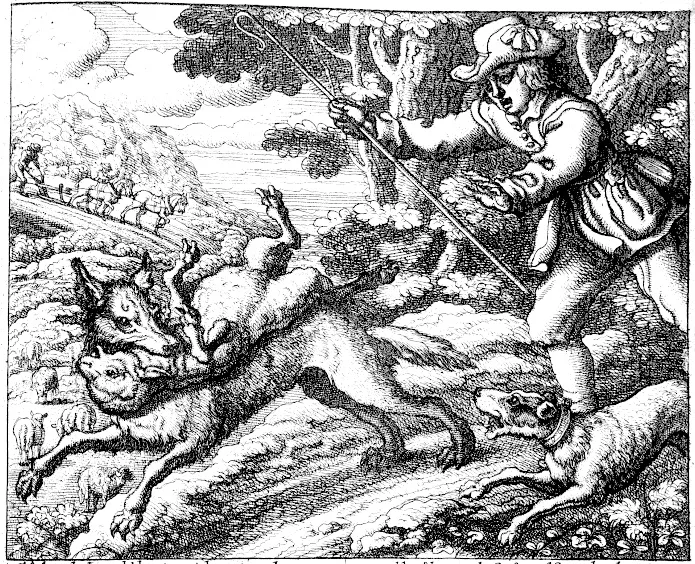
There was once a boy whose job was to watch the sheep on the hillside above his village. It was quiet work. All day the sheep ate grass, and all day there was nobody up there to talk to.
One afternoon he decided to make things less quiet. He ran down toward the village shouting, Wolf! Wolf! A wolf is attacking the sheep!
The villagers came running. The baker dropped his bread. The blacksmith dropped his hammer. They grabbed sticks and ran up the hill — and found the boy laughing. There was no wolf. There was only a boy who had been bored.
A few days later he did it again. Wolf! Wolf! Up the hill they came, angrier this time, and again there was nothing but the boy, holding his sides.
Then one evening a wolf really did come out of the trees. The boy shouted louder than he had ever shouted. Wolf! WOLF! Please — a wolf!
Down in the village, people looked up at the hill, and then back at what they were doing. More of his games, they said. Nobody went up.
Aesop’s fable usually ends with a moral: liars will not be believed even when they speak the truth. But it is worth stopping before the moral and asking whether you agree with the villagers.
The boy lied twice and learned his lesson the hard way. Should a lie cost him the sheep — and cost the villagers their sheep too? If someone you know lies to you once and is truly sorry, how many chances before the answer is never again?
What it is really asking
Once someone has lied to you, what would it take to believe them again?
How to tell it
Tell it slowly, and stop before the end. Ask what the villagers will do the next time the boy shouts, before you tell them what happened.
Where this story comes from
Aesop, “The Boy Who Cried Wolf”
A fable from ancient Greece, about 2,500 years old. Fables are short stories told to make a point — but the best ones leave you arguing about what the point really is.
This is a retelling, not a translation. The words are ours; the story is theirs.