Story · Ages 9–12
Achilles and the Tortoise
The fastest runner in Greece can never catch a tortoise. Can you find the cheat?
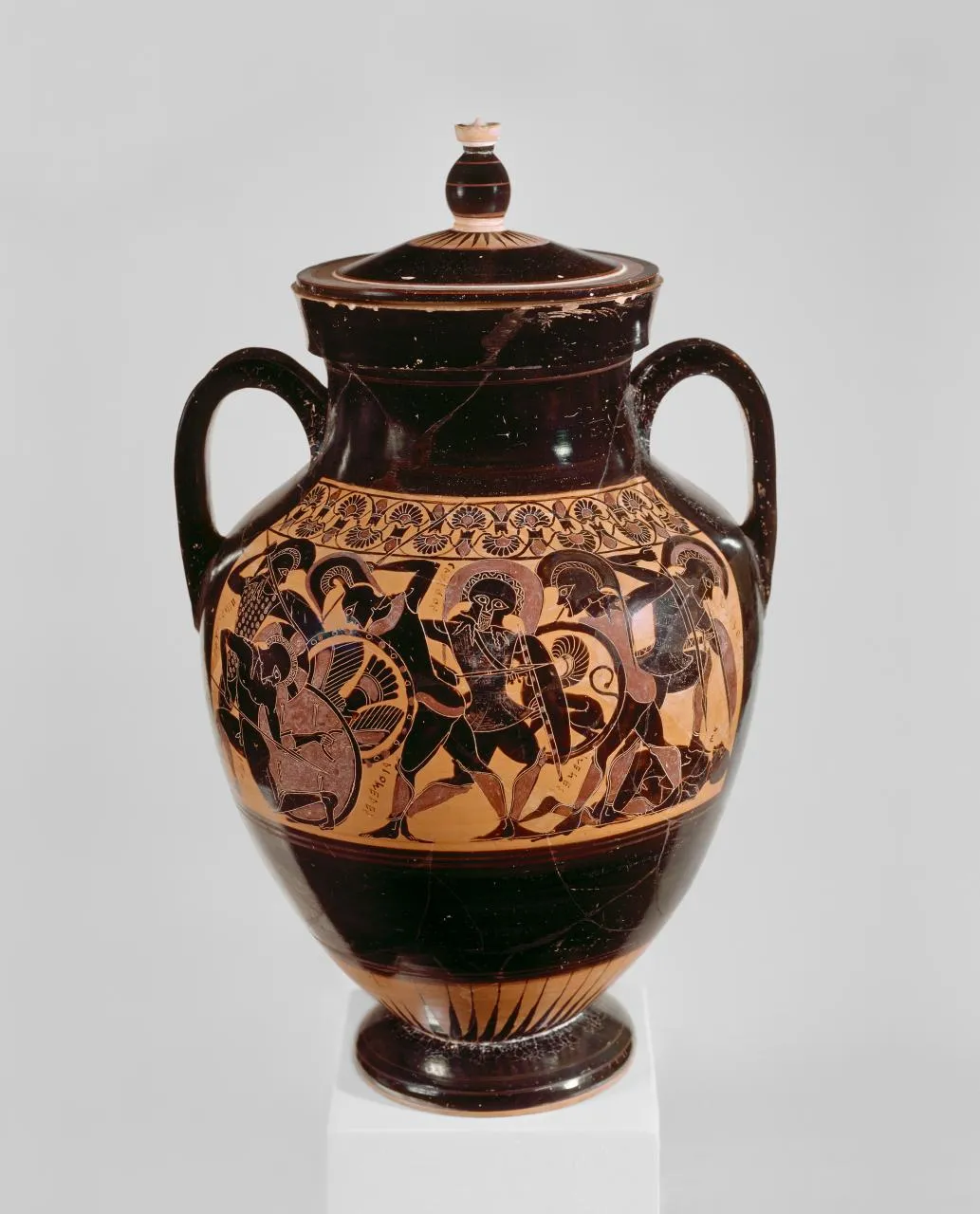
Achilles was the fastest runner alive. A tortoise is among the slowest things alive. So Zeno set them racing, and gave the tortoise a small head start — say, ten metres.
Here is Zeno’s argument that Achilles can never catch it.
To catch up, Achilles must first reach the point where the tortoise started. Running at his speed, that takes him some time — and in that time, the tortoise has crawled a little further ahead, say one metre.
So now Achilles must reach that point. It takes less time than before, but it takes some time — and in that time the tortoise moves a little further. Ten centimetres, perhaps.
To that point, then, and in the meantime the tortoise moves again. The gap shrinks: half, then half, then half. It never quite disappears, because there is always another half to cross first. And you cannot be somewhere you have not yet reached. So the tortoise stays ahead — forever.
You know this argument is wrong, because runners pass tortoises every day. But watch how hard it is to say where it goes wrong. Every single step of the argument looked perfect.
The mathematical part of the mystery took until about two thousand years after Zeno to settle: infinitely many steps can still add up to a finite distance. Half a gap, plus a quarter, plus an eighth, plus… gets closer and closer to the whole gap without ever passing it, and Achilles reaches it in a finite time. The steps run out of room.
But a puzzle is left, and it is not a maths puzzle. Zeno’s real question was about what motion is: how can anything be “at” a place, mid-movement, if between any two places there are always more places? Everyone who has ever run knows the answer with their legs. Saying it with words is harder than it looks — which was exactly Zeno’s point.
What it is really asking
If there is always another half of a gap to cross first, how does anything ever arrive?
How to tell it
Draw it: a line for the track, two markers for the runners. Halve the gap out loud — halfway, halfway, halfway — until the room starts to get suspicious.
Where this story comes from
Zeno of Elea, as retold by Aristotle
A race paradox from Greece, about 2,450 years old. Zeno meant it as an argument that motion is impossible. Motion is obviously possible. Finding the exact flaw in his argument took mathematicians over two thousand years.
This is a retelling, not a translation. The words are ours; the story is theirs.