Story · Ages 9–12
The Ring That Made Him Invisible
What would you do if you knew nobody would ever find out?
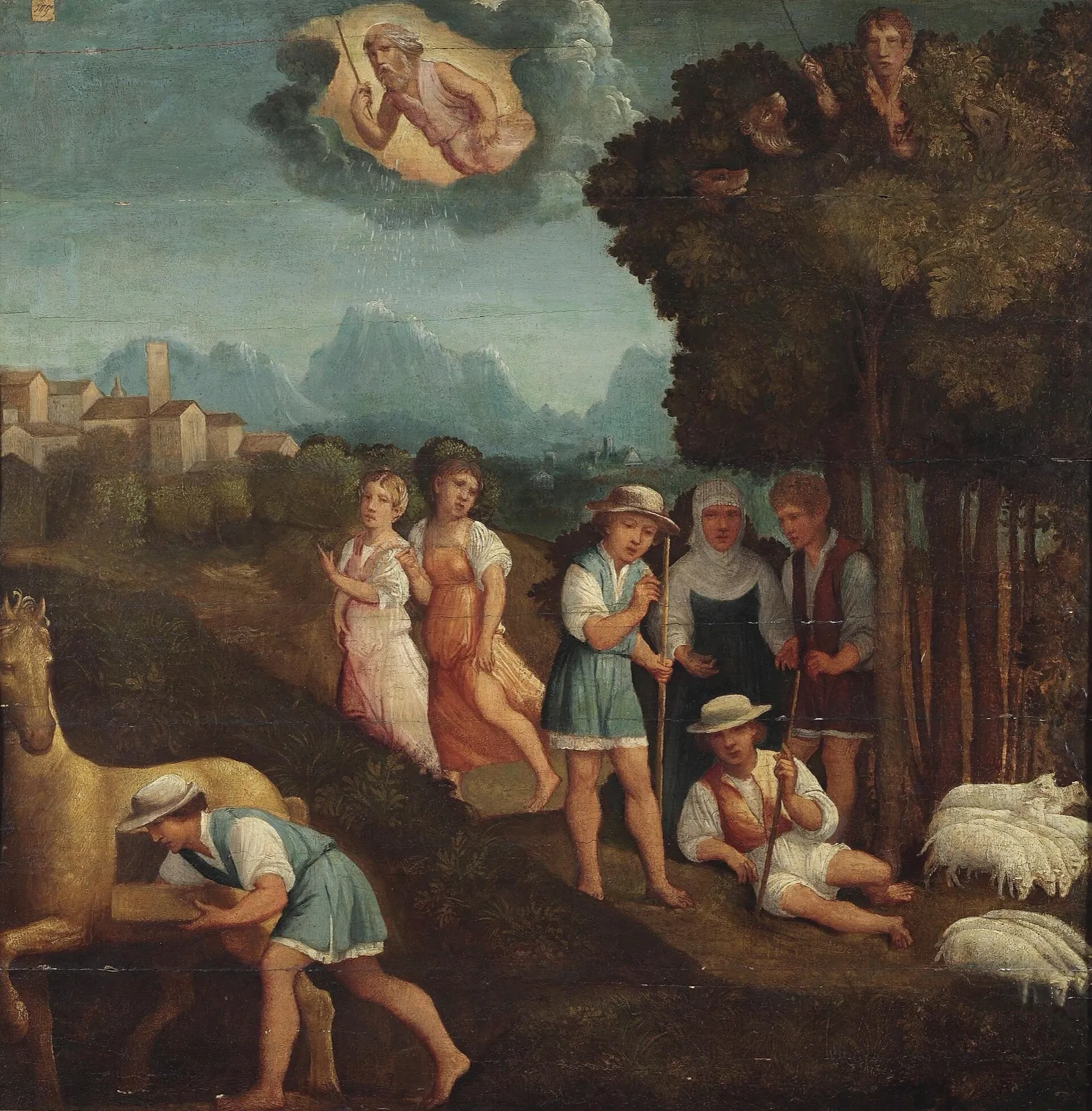
There was a shepherd called Gyges, long ago, in the service of the king.
One day a storm came, and an earthquake with it, and the ground split open where his flock was grazing. He looked down and saw a hole. He climbed in.
Inside, in the dark, there was a bronze horse with doors in its side. Gyges opened them and found a body lying there — larger than a man’s, with a gold ring on its hand. He took the ring and climbed back out.
That evening, sitting with the other shepherds, he turned the ring around on his finger. And they began to talk about him as if he were not there.
He had found the trick. Turned one way, he was invisible. Turned the other, he was back. Nobody could see him, or hear him, or stop him.
Now: you are a shepherd, you are nobody, and there is a king’s palace a day’s walk away. What do you do?
This is what Gyges did. He got himself appointed as a messenger to the court. He used the ring to get close to the queen, and together they killed the king, and Gyges took the throne and the kingdom.
Glaucon, who tells the story, is not really interested in Gyges. He is making a point to Socrates. Give anyone on earth that ring, he says, and you will find out what they are really like. And he asks Socrates to prove that justice — being fair even when it costs you — is worth having for its own sake, and not just because of getting caught.
Plato spends the rest of the book trying. He is still working on it. So are we.
What it is really asking
Are you good, or are you just being watched?
How to tell it
Let the child answer the last question first, before you tell them what happens. Their answer is the interesting part.
Where this story comes from
Plato, The Republic, Book II
Glaucon tells this story to Socrates as a challenge — not as an example. He is arguing that people are only good because they are watched.
This is a retelling, not a translation. The words are ours; the story is theirs.