Story · Ages 6–10
The Emperor's New Clothes
Everybody can see it. Nobody will say it.
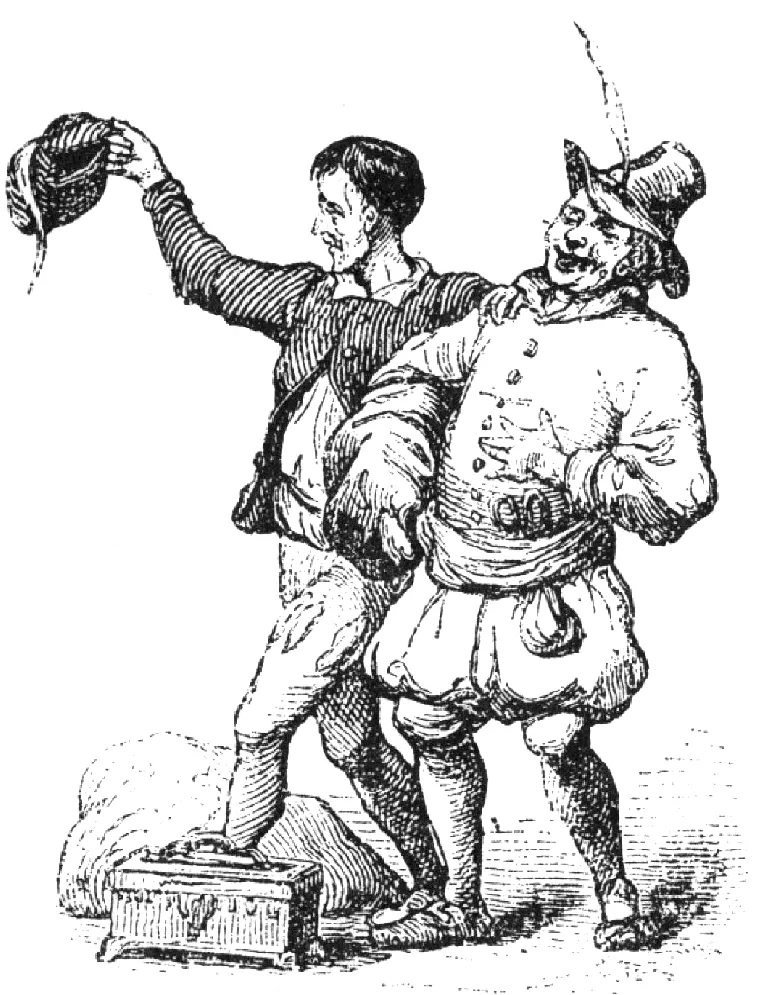
An emperor loved new clothes more than anything else. He spent all his money on them and changed outfits every hour.
Two strangers arrived, claiming to be weavers. They said they could make the most beautiful cloth in the world — and then they explained the wonderful thing about it. The cloth, they said, was invisible to anyone who was stupid, or unfit for their job.
The emperor hired them on the spot. They set up two looms, asked for silk and gold thread, and put all of it in their own bags. Then they pretended to weave, late into the night, on empty looms.
The emperor sent his oldest, most trusted minister to look. The minister stared at the empty looms and saw nothing at all — and thought, if I say I see nothing, they will know I am stupid, and I will lose my job. So he came back and described the cloth in detail: the colours, the pattern, the beauty.
Then he sent another official, and the same thing happened. Then the emperor went himself, with his whole court. Everyone looked. Everyone saw nothing. Everyone said how magnificent it was.
So they dressed him. The weavers pretended to put on each garment, one after another, and the emperor turned this way and that in front of the mirror, and everyone agreed it suited him perfectly.
And he walked out into the street, and the whole town cheered, because not one person wanted to be the one who could not see it.
Until a small child, who had no job to lose and no idea he was supposed to be careful, said the obvious thing out loud.
He isn’t wearing anything.
What it is really asking
Why is it so hard to say the true thing when everyone else is silent?
How to tell it
Let the child be the one who shouts it. Have them do the shouting — that is the whole point of the story.
Where this story comes from
Hans Christian Andersen, 1837
Andersen wrote it as a fairy tale for adults as much as children. The two swindlers' trick only works because everybody is worried about what everyone else will think of them.
This is a retelling, not a translation. The words are ours; the story is theirs.