Story · Ages 6–9
The Man Who Dreamed He Was a Butterfly
How do you know you are not dreaming right now?
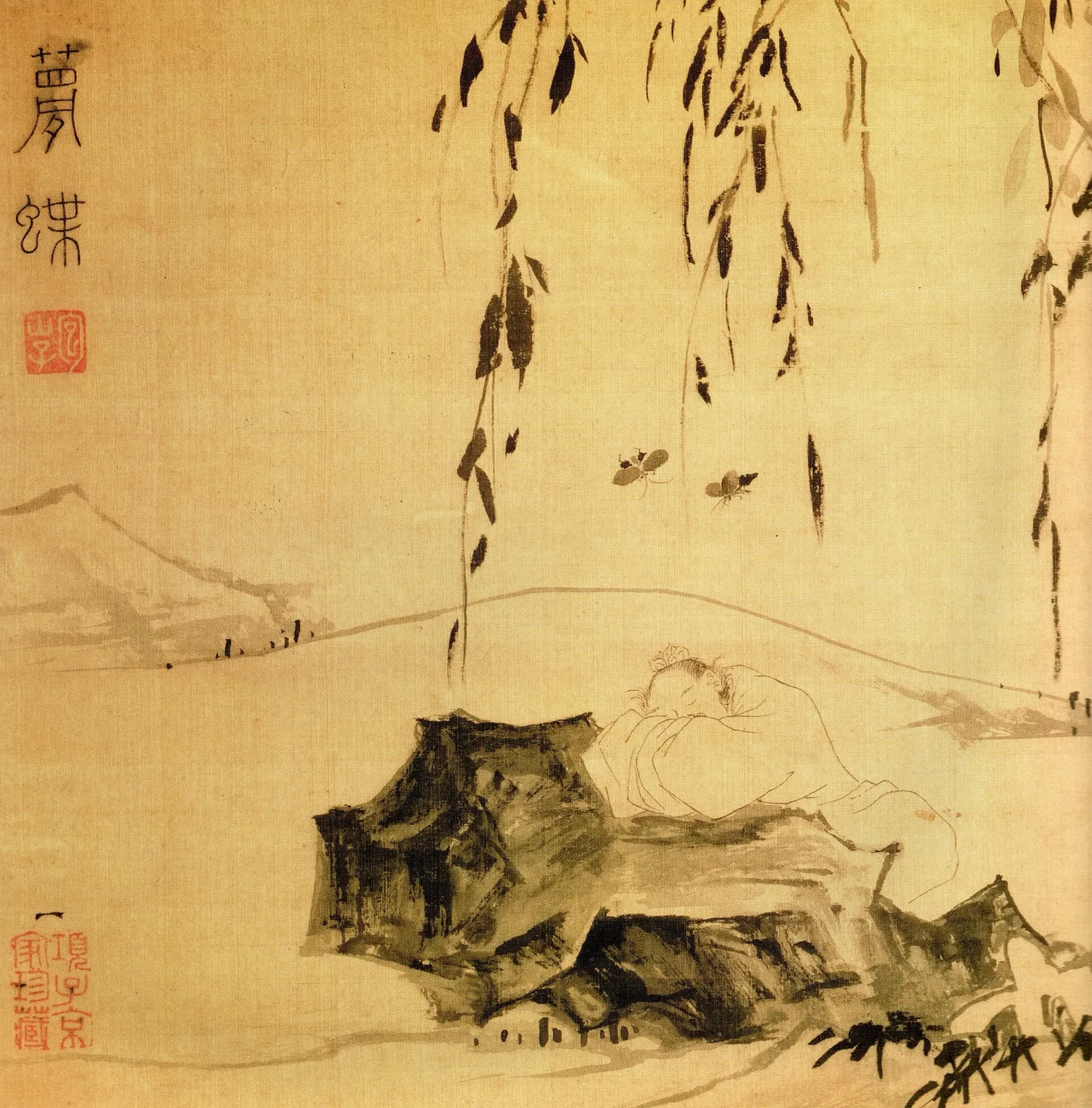
Once, Zhuangzi dreamed he was a butterfly.
It was a very good dream. He was fluttering about, delighted with himself, going wherever he liked and not wondering about anything. He had no idea he was Zhuangzi. He was simply a butterfly, and that was all there was to it.
Then he woke up, and there he was: Zhuangzi. Solid. Lying in a bed, with a body, and a name, and things he had to do that day.
And he could not work out which one was true.
Was he a man who had fallen asleep and dreamed he was a butterfly?
Or was he a butterfly, right then, dreaming that he was a man?
He wrote it down and left it there, without an answer, and people have been picking at it for two thousand years. Descartes asked almost the same question in France, and found it frightening. Zhuangzi found it funny. Both of them noticed the same thing: while you are inside a dream, it is completely convincing, and you cannot step outside to check.
Which leaves a small question that is much harder than it looks. If a dream and a day feel the same from the inside, what exactly makes one of them real?
What it is really asking
If you cannot tell, does it matter?
How to tell it
A bedtime story. Ask them at the end, quietly, and let them fall asleep on it.
Where this story comes from
Zhuangzi, chapter 2
Written in China about 2,300 years ago. This is only three sentences long in the original — it is the whole of it, and it is enough.
This is a retelling, not a translation. The words are ours; the story is theirs.