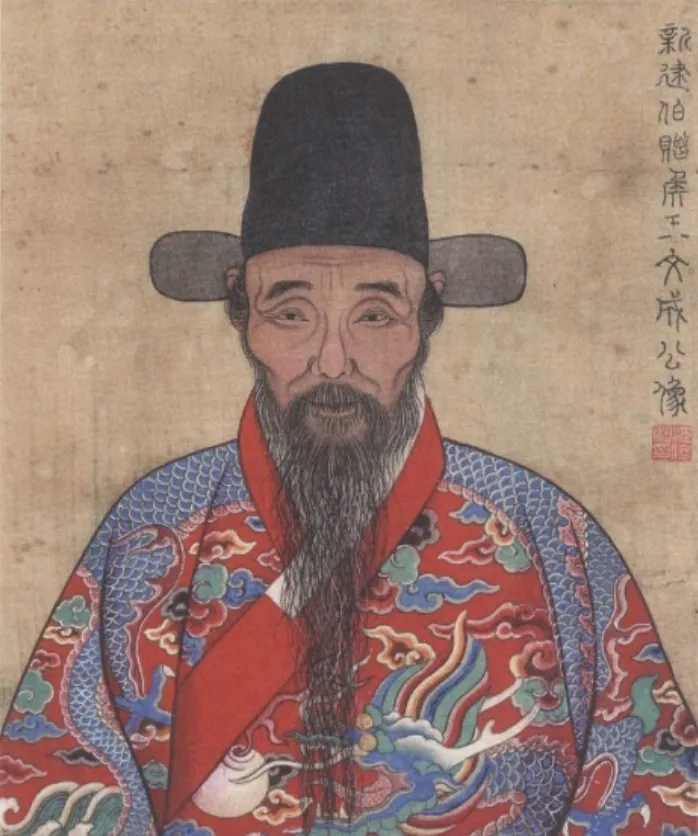
How to Live · 1472–1529
Wang Yangming
He argued that knowing the right thing and doing it are not two steps but one — and that if you know and do not do, you did not really know.
Zhejiang, China · lived 1472 – 1529
Their big question
If you know what is right, why don't you do it?
Wang Yangming’s claim is short and it makes people uncomfortable: knowing and doing are not two things. If you genuinely know that something is right, you do it. If you know and do not do, you did not know — you had an opinion about it.
This attacks a very comfortable arrangement. Almost everyone holds, in practice, that understanding is one job and acting is another: first you learn what is right, then, if you are good, you do it. That story explains failure as weakness of will, and it lets you keep your self-image while doing nothing. Wang’s version gives you no such exit. The thing you did not do becomes evidence about what you actually understood.
The background is a disagreement within Chinese philosophy about where to look for guidance. Some held that you learn the right way by studying the world — investigating things, exactly as Zhu Xi had taught. Wang said the standard is already inside you, an innate ability to recognise right from wrong, and that the problem is never a shortage of it but an accumulation of self-interest, habit and noise covering it up.
He was not writing from an armchair. He was beaten, exiled and later given military commands, and he ran them the same way: act from the clear judgement you have, and distrust any sophistication that lets you wait.
“There is no knowledge apart from action; knowing and doing are one.”
A summary of his doctrine of the unity of knowledge and action, argued against the prevailing view that understanding comes first and practice follows.
Three things worth knowing
- He was a general as well as a philosopher, and put down a major rebellion — an unusual credential for someone writing about inner knowing.
- He arrived at his central insight while living in exile in a remote province, having been beaten and demoted for criticising people in power.
- He taught that everyone already has a capacity to tell right from wrong, and that the task is to stop clouding it rather than to acquire it.
Try it — think like Wang
Think of something you say you know is right and habitually do not do. Instead of trying harder, ask whether you actually believe it. The gap you find is the thing he was talking about.
王守仁 — Shen Junhui (沈俊繪). Source on Wikimedia Commons.