How to Live · c. 413–323 BCE
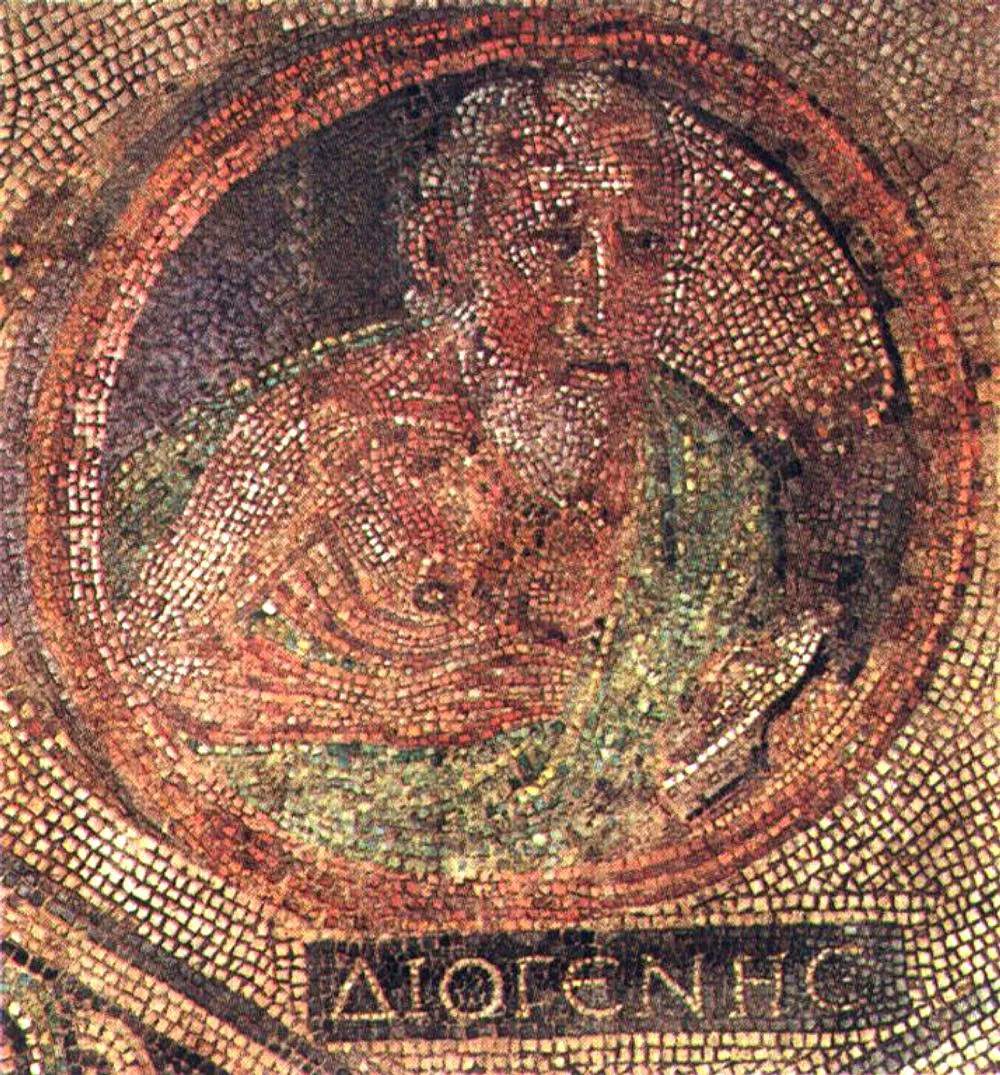
Diogenes
He owned almost nothing, slept in a clay jar, and said he was happier than the people who owned everything.
Sinope & Athens, Greece · lived 413 BCE – 323 BCE
Their big question
How little do you need to be happy?
Diogenes decided that most of what people chase — money, reputation, comfortable furniture — was a trap. Not because he was gloomy, but because he had noticed something: the more you own, the more you have to look after, and the more you have to look after, the less you are free to do.
So he gave things up, one at a time, until there was almost nothing left. He moved into a clay jar, wore one cloak winter and summer, and ate whatever came his way. When people threw stones at his jar, he did not move. When a rich man invited him to dinner and told him not to spit on the floor, Diogenes spat in the rich man’s face — he said it was the only dirty place he could find.
He was not a nice man. He was a useful one. Everything he did was a demonstration: look at how little you need. He called himself a citizen of the world, which meant he refused to belong to one city or one group. And when Alexander the Great — the most powerful person alive — stood over him and offered him anything, Diogenes looked up and said the only thing he actually wanted: please move, you are blocking my sun.
“I am a citizen of the world.”
Someone asked him where he was from. That was his answer — and in a city that cared a great deal about where you were from, it was a rude one.
Three things worth knowing
- He lived in a large clay storage jar in the market square of Athens — not as a punishment, but on purpose.
- He walked around in daylight carrying a lamp, saying he was looking for an honest man.
- When Alexander the Great came to meet him and offered him anything he wanted, Diogenes asked him to stand out of his sunlight.
Try it — think like Diogenes
Pick the thing you would keep if you could keep only five. Then four. Then three. Notice which ones were easy to give up and which one hurt — that one is telling you something about yourself.
Diogenes Mosaic Römisch-Germanisches Museum — Unknown authorUnknown author. Source on Wikimedia Commons.