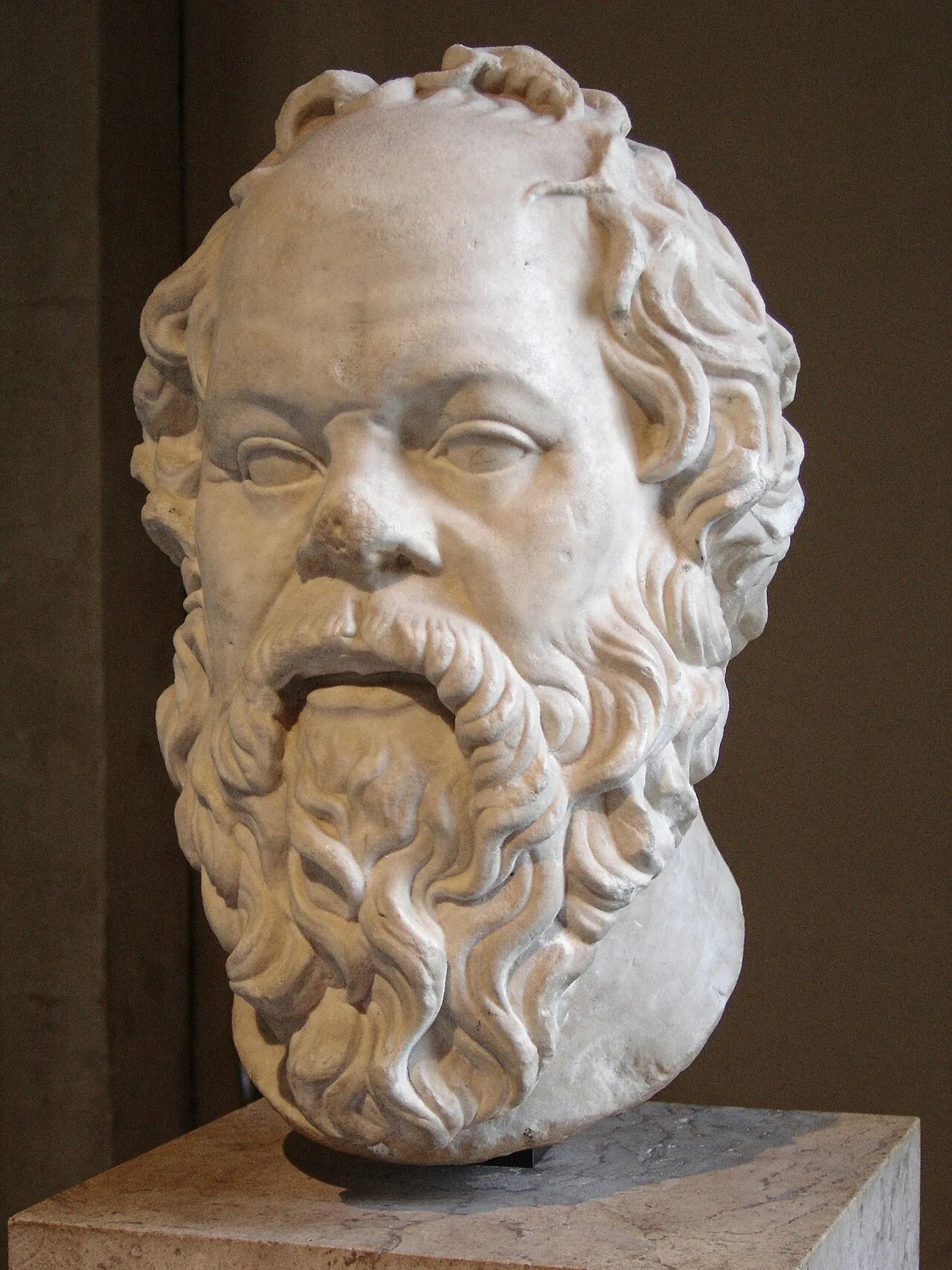
How We Know · 469–399 BCE
Socrates
The man who asked so many questions that it got him into trouble.
Athens, Greece · lived 469 BCE – 399 BCE
Their big question
What does it mean to live a good life?
Socrates did not write anything down. He walked around Athens and asked people questions. He asked shopkeepers, soldiers and politicians: what is courage? what is fair? how do you know?
Most people thought they knew the answers. Then Socrates asked three or four more questions and - slowly, politely - they discovered they were not so sure. He said the only thing he knew was that he did not know much.
Some people loved him for it. Others found it annoying. In the end he was put on trial and told to stop. He would not stop asking, so he was given a cup of poison. Even his last conversation was a question.
“The unexamined life is not worth living.”
He meant: a life you never stop and think about is a life you are not really steering.
Three things worth knowing
- He never wrote a single book. We know him through his students.
- He said his mother's job - helping babies be born - was his job too, but for ideas.
- His method has a name: the Socratic method. It means teaching by asking, not telling.
Try it — think like Socrates
Pick one word you use a lot - fair, brave, kind. Ask three people what it means. Write down where their answers disagree. Congratulations: you just did philosophy.
Socrates Louvre — Copy of Lysippos (?). Source on Wikimedia Commons.