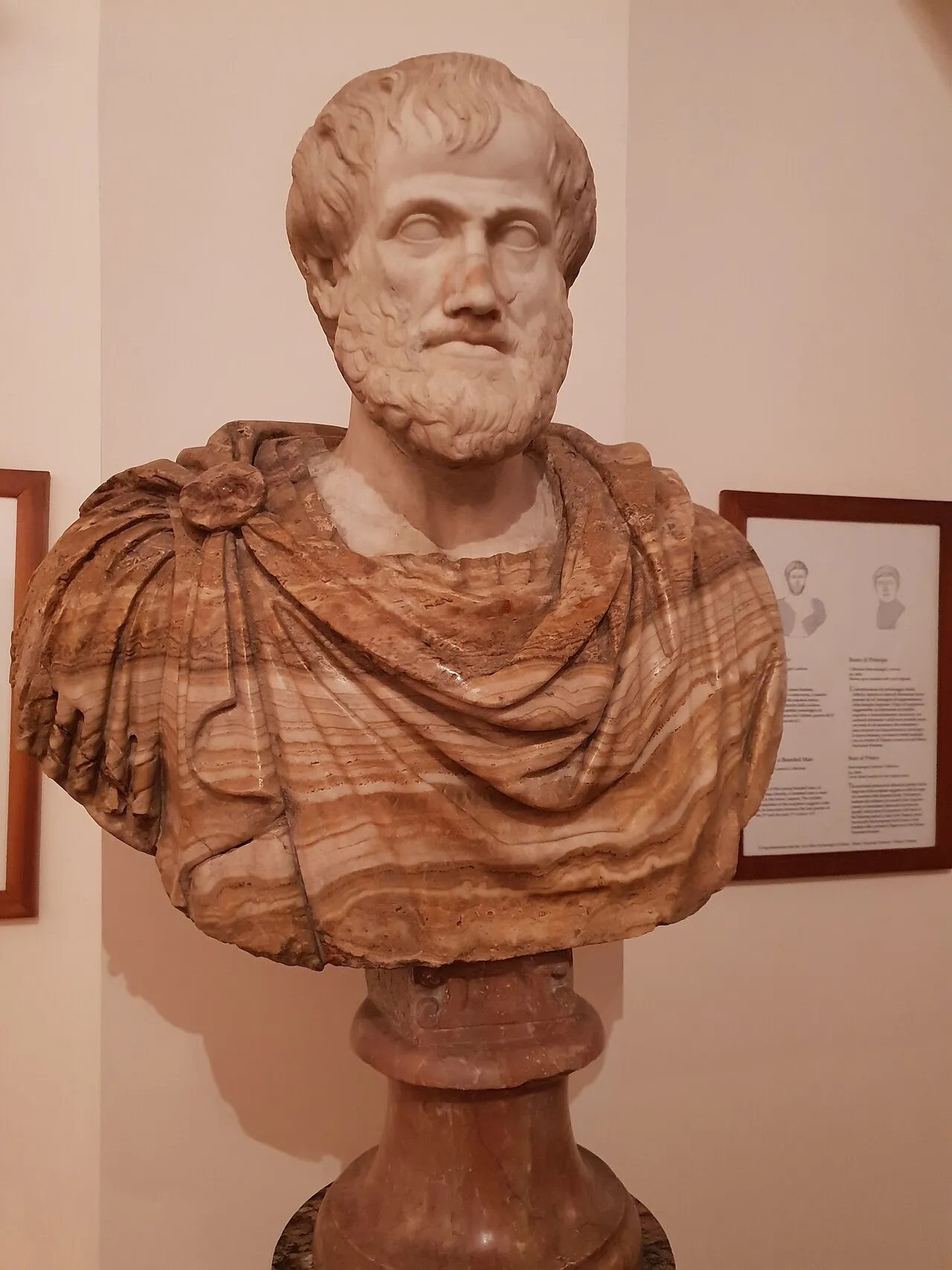
How We Know · 384–322 BCE
Aristotle
He thought you learn more from one careful look than from a hundred guesses.
Stagira & Athens, Greece · lived 384 BCE – 322 BCE
Their big question
How do we find out how things really work?
Aristotle was a student of Plato, then tutor to Alexander the Great, then the founder of a school called the Lyceum. He also collected animals, and he wrote down exactly what he saw them do.
He said: do not float above the world thinking about perfect invisible things - go and cut open a squid, keep bees, watch how a chick forms inside an egg. Look first. Then think.
He also asked what makes a person good, and answered with habits. Being brave is not a feeling; it is something you practise until it becomes automatic.
“We are what we repeatedly do.”
So a habit is not a small thing. It is the factory where your character gets made.
Three things worth knowing
- He described hundreds of species by hand, centuries before microscopes.
- He taught that courage sits in the middle between recklessness and cowardice - the 'golden mean'.
- People call him the first scientist for the way he insisted on evidence.
Try it — think like Aristotle
Choose one thing you can watch: a plant, a pet, a candle, a cloud. Watch it for five minutes without doing anything else and write two sentences about what changed that you had never noticed before.
Bust of Aristotle 02 — MumblerJamie. Source on Wikimedia Commons.