Who Am I · 1870–1945
Nishida Kitaro
He tried to describe experience before it gets divided into a self and a world, and built a whole philosophy from that starting point.
Japan · lived 1870 – 1945
Their big question
What is happening before you divide things into you and everything else?
Most philosophy starts with a self over here looking at a world over there, and then asks how the two are connected. Nishida began somewhere else, and the move is worth understanding even if you never accept it.
Take the sound you are hearing right now. There is the sound. Then there is the fact that you labelled it, and a you who did the labelling, and a thing that was labelled. Nishida pointed out that the first moment — the sound before the split into one who hears and something heard — is where experience actually begins. He called it pure experience, not because it is mystical, but because it is prior to the division we normally take as given.
He then had to explain why we ever leave that state, and his answer is that we do it to get things done. When you are absorbed in a task, the split disappears; the split appears when something goes wrong, or when you have to think about yourself. So the everyday sense of being a separate self is not the foundation of experience. It is something we construct, for practical reasons, out of something that was not divided.
This is a genuinely different starting point from almost everything in the European tradition, and it produces different questions. Descartes began by proving that he existed. Nishida began by suggesting that the question of whether you exist only arises after you have already left the interesting place.
“Pure experience is experience just as it is, before any division into subject and object.”
The opening idea of his first book, An Inquiry into the Good — a description of experience prior to the categories we usually add to it.
Three things worth knowing
- He taught in provincial schools for years before getting a university post, and wrote his first book while still teaching secondary school.
- He founded the Kyoto School, an attempt to think through Western philosophy while starting from Zen practice rather than from Greek problems.
- His career was shadowed by politics: he was pressed into service explaining Japanese expansionism, argued against some of it, and died shortly after the war ended.
Try it — think like Nishida
Listen to a sound without naming it. The moment you think 'a bird', something has been added. Try for ten seconds to hear it before the naming starts, and notice what that is like.
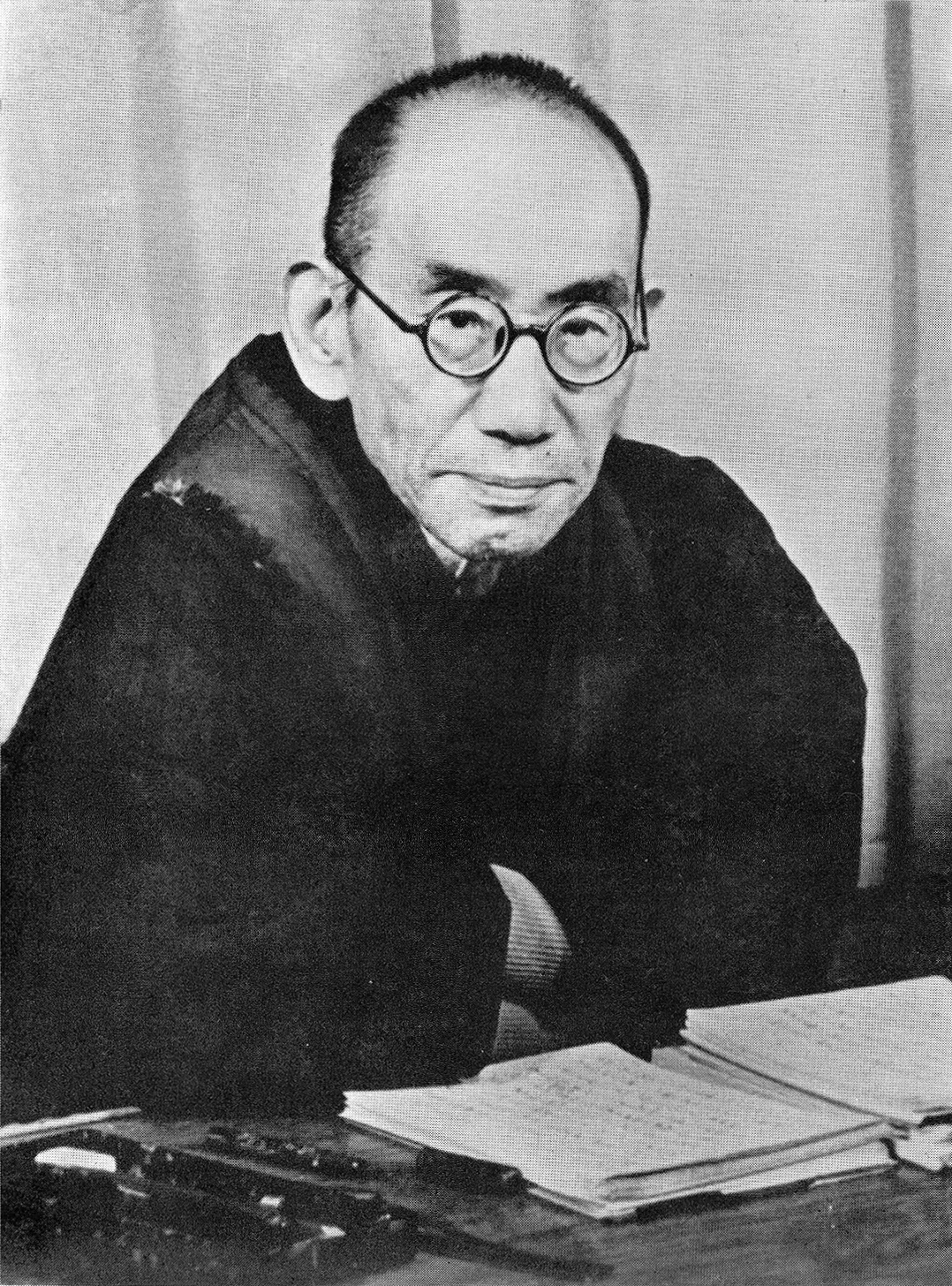
Portrait-of-Kitaro-Nishida — Unknown authorUnknown author. Source on Wikimedia Commons.