Who Am I · 1596–1650
René Descartes
He doubted everything, and found one thing he could not doubt.
France & Sweden · lived 1596 – 1650
Their big question
How do you know you are really thinking right now?
Descartes decided to throw out everything he believed and start again, keeping only what he could prove. To make it fair, he even pretended that a sneaky demon was putting fake pictures into his head.
Everything crumbled. How do you know your memories are real? How do you know the room is there? Then he noticed something: whatever the demon does, someone is being tricked. Someone is thinking.
So: I think, therefore I am. That was his one unshakeable stone. He then tried to build the rest of knowledge on top of it - a fair bit of it collapsed, and that was useful too.
“I think, therefore I am.”
Not 'I am clever', and not 'I am right'. Only: something is going on in here, so there must be a here.
Three things worth knowing
- He invented the graph grid you use in maths - that is why they are called Cartesian coordinates.
- He liked to think in bed until late morning; a queen dragged him out of it to teach her at 5am, which may have killed him.
- His trick of doubting on purpose is now the most-used method in philosophy.
Try it — think like René
Play 'doubt three things'. Choose three things you are sure of ('my shoes exist', 'Tuesday comes after Monday', 'my friend likes me') and for each, ask: how do I know? If you can defend one of them, you have done better than Descartes.
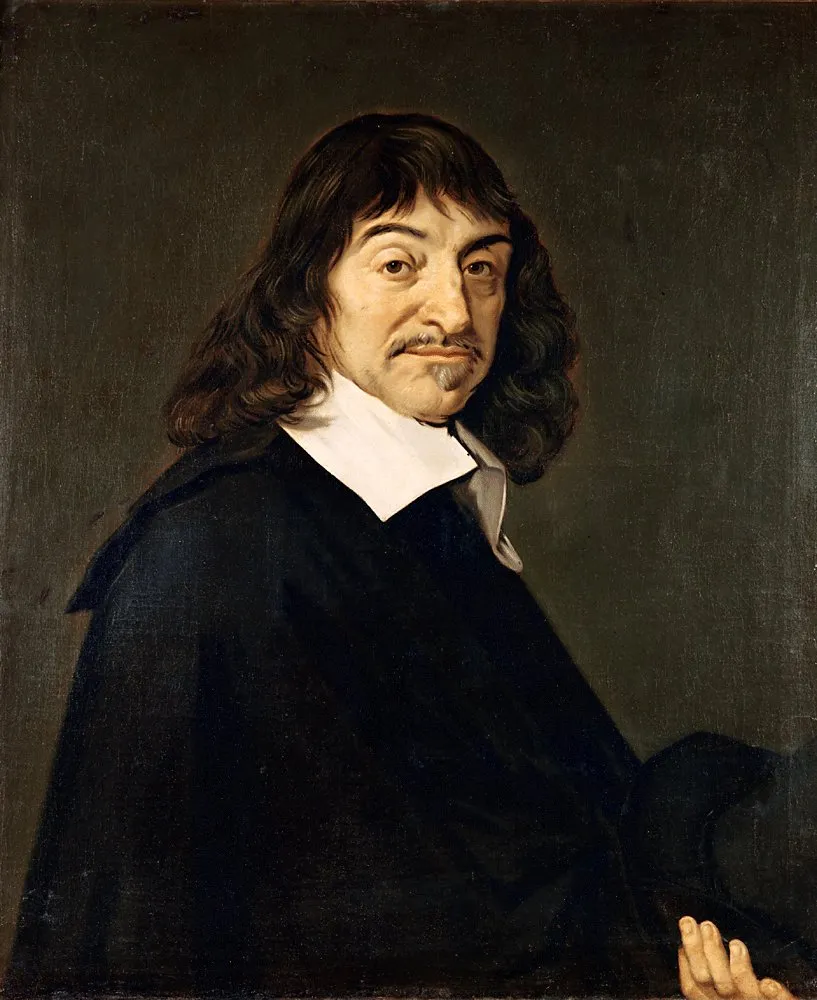
Frans Hals - Portret van René Descartes — After Frans Hals. Source on Wikimedia Commons.