Living Together · 1806–1873
John Stuart Mill
He tried to answer the question every child asks: why shouldn't I do what I want?
London, England · lived 1806 – 1873
Their big question
How much freedom should you have?
Why shouldn’t you do what you want? The usual answers are: because it’s against the rules, or because it’s wrong, or because someone bigger says so. John Stuart Mill thought all of those were the wrong kind of answer, and he tried to find one rule to replace them.
Here it is. You should be free to do anything you like, and nobody — not the government, not your neighbours, not the majority, not even your friends — should stop you, unless what you are doing harms someone else. That is it. Not offends. Not annoys. Not disagrees with. Harms. He was blunt that your own good is not a good enough reason to interfere with you: other people do not get to stop you from doing something they think is bad for you, because it is your life and you are the one living it.
Mill knew the hard questions were all at the edges. What if it harms someone slowly, or harms many people a little, or harms someone who cannot complain? What if the harm is that you have stopped someone else being free? What counts as harm, and who gets to decide? He did not settle those questions. He just drew the line in a new place, and made everyone argue about it there.
He also insisted on the other half of the idea, which people who quote him forget: because a harmed person is the only thing that justifies stopping you, a society that never lets anyone be wrong about anything is a society that has stopped thinking. If you are never allowed to try something and find out it was a mistake, you never find out anything.
“The only purpose for which power can be rightfully exercised over any member of a civilised community, against his will, is to prevent harm to others.”
He called this one very simple principle. It has kept lawyers busy ever since, mostly because nobody agrees on what counts as harm.
Three things worth knowing
- His father taught him Greek at three and kept him away from other children on purpose, to see what education alone could do. It worked, and it left him in a crisis by twenty.
- He wrote On Liberty in 1859, in which the harm principle appears.
- He argued in Parliament for giving women the vote, in 1867. It was voted down, 196 to 73.
Try it — think like John
Take an argument you have actually had. Write down who was harmed — really harmed, not annoyed, not offended, not embarrassed. If the honest answer is nobody, that is interesting. If it is somebody, say exactly how.
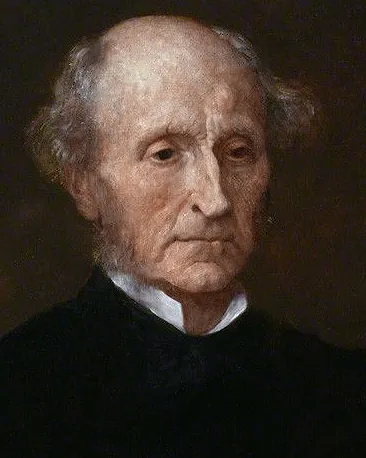
John-stuart-mill 1 — George Frederic Watts. Source on Wikimedia Commons.