Living Together · 1868–1963
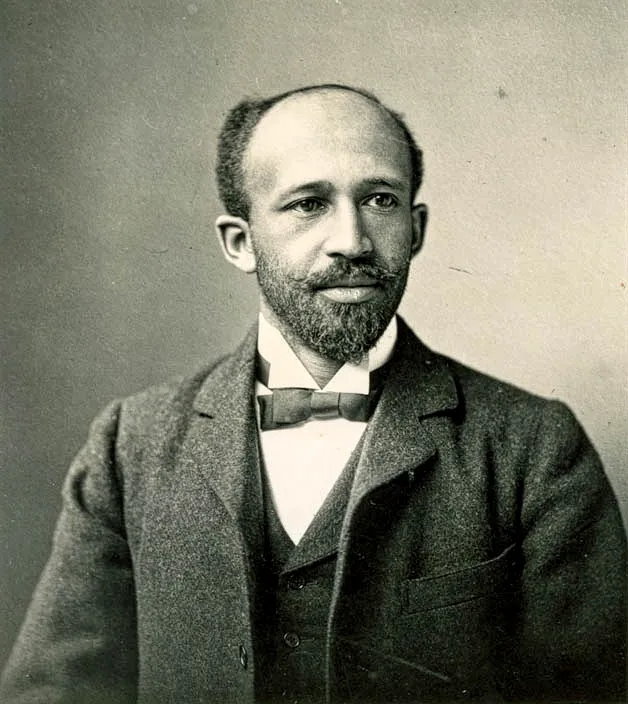
W. E. B. Du Bois
He described what it is to see yourself through the eyes of people who look down on you — and wrote it as one of the first to do so.
United States & Ghana · lived 1868 – 1963
Their big question
Who are you when other people see you wrongly?
Du Bois asked a question that most philosophers of his time had not noticed was a question. If you grow up where everything around you says your kind of person is lesser — the newspapers, the schools, the pictures on the walls, the tone of voice in a shop — what happens to your sense of who you are?
His answer was double consciousness. You do not simply see yourself; you see yourself being seen, continuously, through eyes that were built to look down on you. You are two things at once: what you know yourself to be, and the mannered, permanent image handed to you by a society that does not ask. He described the feeling not as weakness but as a permanent, exhausting second job.
It is a philosophical idea in the strict sense: a claim about the structure of self-knowledge, and about how much of your identity is not yours to determine. It also dissolves a common assumption — that being free is simply the absence of being stopped. You can be stopped by nothing and still spend your whole life translating yourself.
He did not stop there, which is what makes him a useful figure rather than a saint. He argued all his life about what to do with the position: separate development, integration, protest, research, organising. He changed his mind, publicly, more than once, and went on arguing — the double consciousness was a fact to be understood and a machine to be dismantled, not a fate.
“It is a strange sensation, this double consciousness — always looking at oneself through the eyes of others.”
A paraphrase of the opening of The Souls of Black Folk, where he sets out seeing yourself through the eyes of a society that dismisses you.
Three things worth knowing
- He was the first African American to earn a doctorate at Harvard, and he had already studied in Berlin.
- He wrote The Souls of Black Folk in 1903, mixing essays, history, songs and stories — a book that made its argument partly by being written in several voices.
- He spent his life as a researcher, an editor, an organiser and finally an exile, moving to Ghana in 1961 and dying there in 1963.
Try it — think like W.
Draw two pictures of yourself: one as you see yourself, one as you think a stranger sees you on first sight. Then write what happens in the gap between them.
Du Bois, W. E. B. — Unknown authorUnknown author. Source on Wikimedia Commons.